Table of Contents
Which Worktop is Cost Effective? Granite or Quartz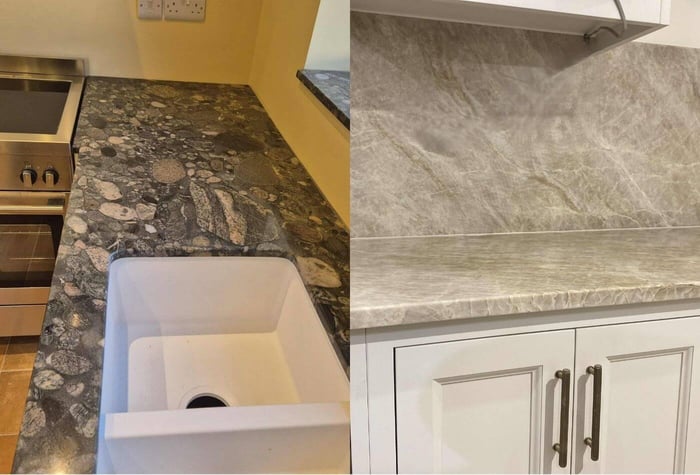
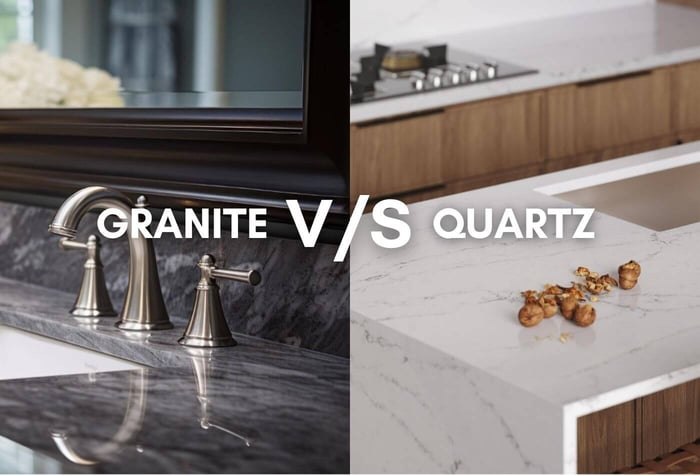
If you’re looking for a kitchen worktop and in a dilemma about what kind of material to use? How expensive would it be? Which will be more cost-effective? What are the practical uses? How long will it last? and What kind of maintenance is needed? If you have these questions in your mind, then we are going to explore the possible options available and also help you to make decisions to choose between Granite vs Quartz based on facts.
When your choices in selecting your worktop are limited to Granite and quartz, this article throws light into the details of these materials under a magnifying glass to choose the right countertops for you. Granite and Quartz look alike externally but on closer inspection, the dissimilarities and the uniqueness of each worktop material can be studied
What is Granite / Quartz?
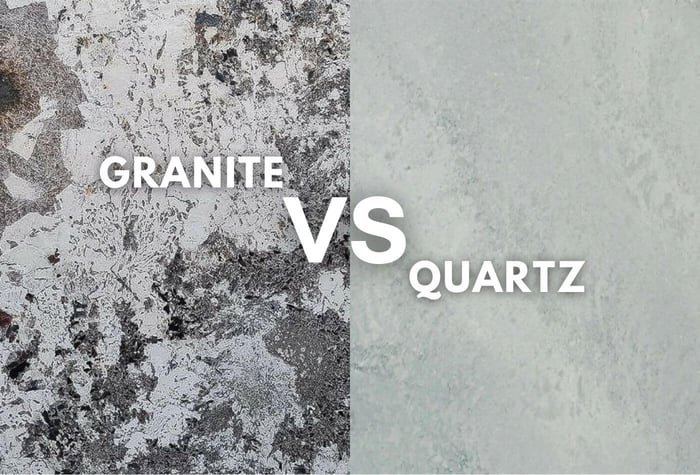 Granite slabs are natural stones formed by the cooling down of magma under the earth crust. where quartz is engineered stone produced mined from 100% natural stone and are artificially synthesised by mixing crushed quartz, polymer resin (binding agent) and colour pigments to give an aesthetically pleasing finished product. The composition is made 93% of quartz and 7% resin. Quartz are engineered stones whose composition has a major percentage of natural quartz but also has other minerals in substantial quantities. Quartz countertops are made using crushed natural quartz, colour pigment and a binding resin. Crushed quartz content can amount from 92% to 94%.
Colours and Patterns
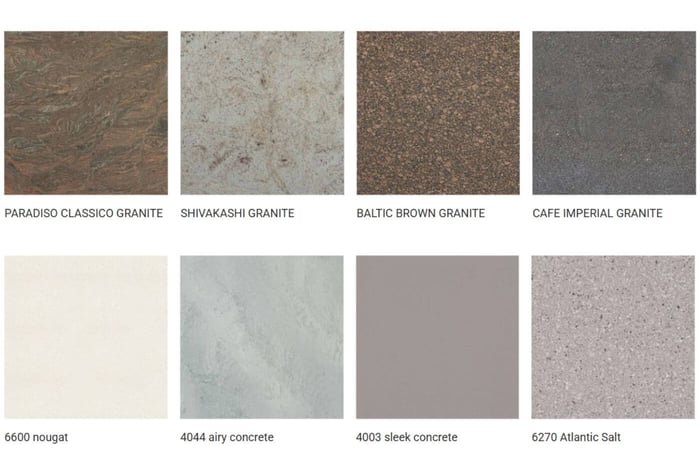 Granite worktops are unique and have an inherent beauty and elegance bestowed by nature, that never disappoints to meet the eye. The wide range of colours available in granite is useful to match the décor with the interiors.
Quartz are engineered and have a larger chromatic spectrum to choose from and match with. Quartz have a smooth and seamless shimmer which reflects like a mirror.
Durability
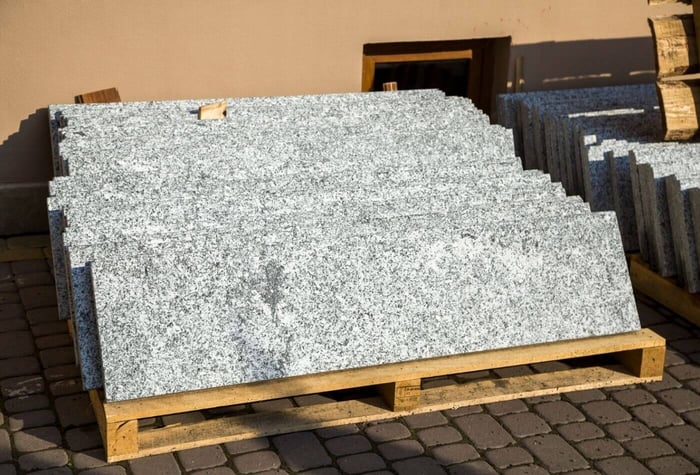 Granite are highly durable, and there is not a need for worry when it comes to scratches on the granite. The value of the granite will not depreciate and remains stable as the durability of the granite.
Quartz are also durable and have high strength but not with a full lifetime guarantee. Quartz countertops mitigate risks of chipping or cracking due to misuse of the material.
Try White Ama Quartz, White Topazio Granite, Emerald Black Granite, Virginia Quartz, Mezanotte Quartz, Amarelo Macieira Granite, Black Marinace Granite, Pedras Salgadas Granite, Angola Black Granite, Indian Black Ultimate Granite, Antarctic White Granite, Verde Sao Francisco Granite, White Fusion Granite, QF Brown Quartz, Nougat Quartz, Black Mirror Quartz, Marquina Quartz, Enigma Quartz, and Clamshell Quartz, Super White Quartz, Vega Starlight Quartz, Rosa Porrinho Granite, Compac Volcano Grey Quartz, Avalanche Quartz, and Bianco Drift Quartz, which are highly durable materials.
Resistance
Granite are stain-resistant as they are sealed not to absorb liquids, the sealant must be kept intact and care should be practised. They also fare well in heat-resistant properties withstanding hot pans without causing any damage to the surface.
Quartz worktops have no risk of liquid seeping in or accidental oil spill as they are naturally non-porous material when engineered. Heated pans must be handled with care on the quartz as they are subjected to crack in fracture due to the heat.
Maintenance
Granite worktop surfaces are easy to clean, a mild cleaning liquid and a microfiber cloth go hand in hand in keeping the sheen intact that lasts longer. Quartz surfaces need a non-abrasive soap solution and a scratch-free scrubber to protect the gleam on the glassy surface of the quartz worktops for a longer period of time
Quartz vs. Granite: Which Stains More?
You must know the differences when it comes to Quartz vs. Granite! Both are stain resistant, Quartz is less likely to stain than granite due to its non-porous nature. Quartz are mostly engineered with resins and pigments, making them the most spill resistant material from coffee, wine, and oils. Most importantly liquids cannot penetrate deep into quartz, they remain on the topical surface, preventing stains and liquids. On the other hand, granite is naturally porous, meaning it can absorb liquids if not sealed properly. Certain Granites like Sapphire Brown Granite, and Turquoise Granite, which prevents stains, especially lighter shades, are more prone to staining than darker varieties. However, sealing granite annually or biannually creates a protective layer that reduces staining risks. Try Colonial White Granite, Grey Shimmer Quartz, Valley White Quartz, Calacatta Jasmines Quartz, White Galaxy Quartz, Calacatta Santa Quartz, Sand Speckle Quartz, Empire Grey Quartz, Empira White Quartz, Rugged Concrete Quartz, Cemento Quartz, Cloudburst Concrete Quartz, Monterosa Quartz, Carbon Quartz, Bianco Assoluto Quartz, Grey Mirror Quartz, Snow Quartz, White Mirror Quartz, and Jura Blue Quartz, which are the best heat-resistant materials.
Facts & Comparisons:
✔ Quartz resists stains better due to its non-porous structure (Consumer Reports, 2023).
✔ Granite can stain if left unsealed, especially with acidic liquids like lemon juice or wine (Marble Institute of America).
✔ Granite requires periodic sealing, while Quartz does not need sealing at all.
Price
Granite materials are expensive according to their availability and grade, though cheaper varieties are available. Think about it as a long term investment and choose the right material for the natural stone. You can also get a approximate estimate if you need from our experts or use of price calculator feature as a cost effective solution.
Quartz materials are available and have become affordable in recent years. They are highly preferred for the array of colours and the aesthetics they offer for a stone engineered by a man. Try Super White Shimmer Quartz, an affordable Quartz material with high-durable capacity.
The price difference between Quartz and Granite depends on factors like quality, brand, and installation costs. Here's a general breakdown:
Material | Price per Square Metre |
Quartz | £290.78 - £400 |
Granite | £230.97 - £500 |
Key Price Factors
1. Quartz typically more expensive than mid-range granite due to manufacturing costs.
2. Granite has a wider price range depending on rarity and pattern uniqueness.
3. Installation costs are similar for both, but granite may cost more for custom cuts.
4. Maintenance: Quartz requires less upkeep, while granite needs sealing every 1-2 years, adding long-term costs.
Would you like recommendations on which material suits your needs best? Call Work-tops.com +44 0330 113 5868 or mail to info@work-tops.com for the solution. To wrap it up, The facts are right before you, it is always better to take a well-informed decision before making an investment, now you can choose from the options available that suit your conditions better to get your dream kitchen worktop installed. Check out both our Quartz collection and Granite collection before making your choice.
P.s: The readers are informed that none of the content available on any of the pages of Work-tops.com should be taken as legal advice and that Work-tops will not be held accountable for your use of the information contained in or linked from these web pages.